
Meet the Founder
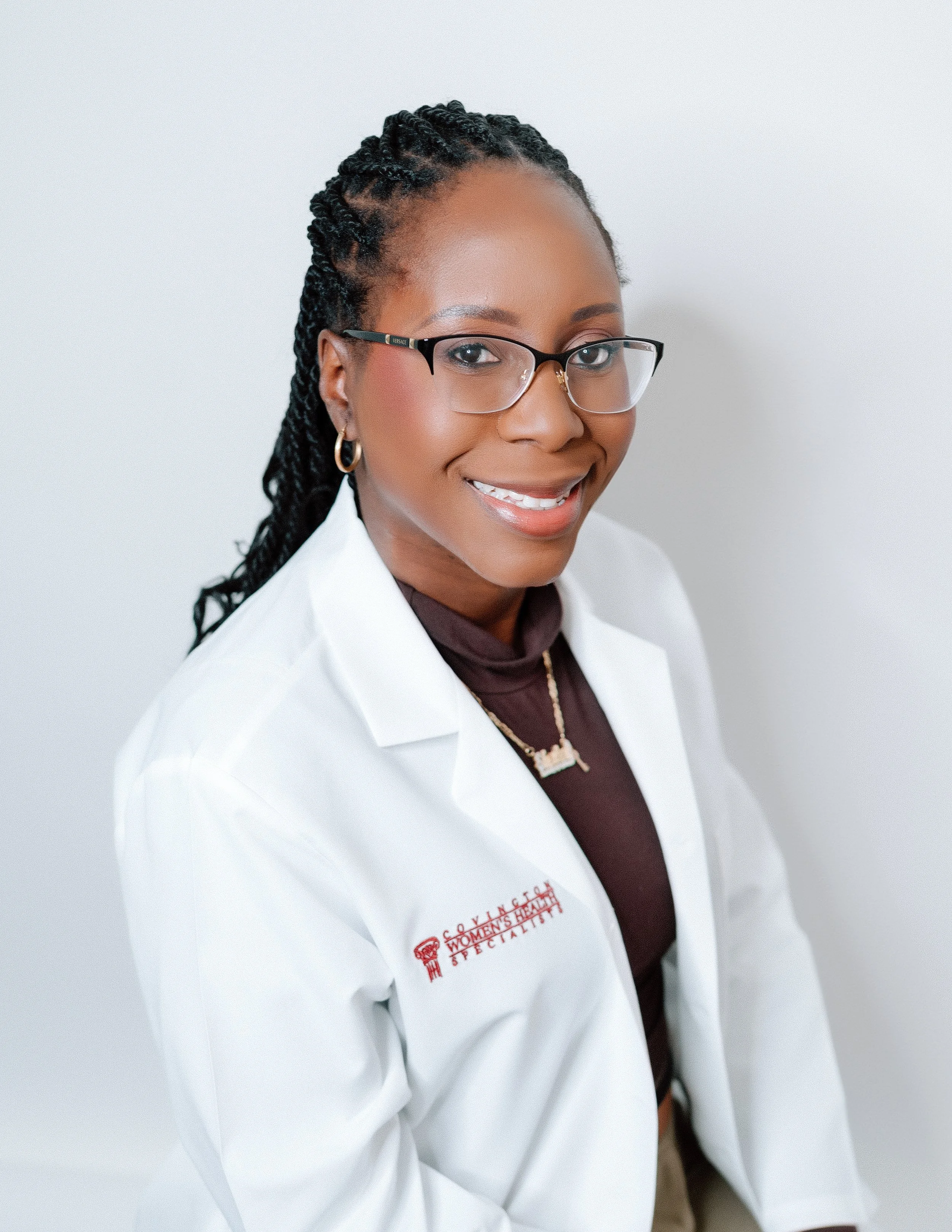
Sherley Samuels, MD, FACOG
Founder & Executive Director
Dr. Sherley Samuels is a board-certified obstetrician-gynecologist with more than a decade of experience caring for women across all stages of life. She has earned the American Board of Obstetrics and Gynecology's Focused Practice Designation in Minimally Invasive Gynecologic Surgery (MIGS), reflecting her advanced expertise in minimally invasive gynecologic surgery. Since completing her residency in 2015, she has practiced with Covington Women's Health Specialists in Covington, Georgia, where she provides comprehensive obstetric and gynecologic care with a special interest in minimally invasive gynecologic surgery.
A graduate of St. Francis College in Brooklyn, New York, Dr. Samuels earned her Bachelor of Science in Biology on a full academic scholarship and graduated cum laude. She then attended Temple University School of Medicine, where she was awarded the Dean's Award Scholarship in recognition of her academic achievement. She completed her residency in Obstetrics and Gynecology at Rutgers University New Jersey Medical School. Throughout residency, she distinguished herself through excellence in patient care, education, and surgical training. She was selected by her faculty and peers to serve as Administrative Chief Resident, a distinction recognizing outstanding leadership, professionalism, and clinical excellence. She also received numerous additional honors during her residency training, including the Chairman's Award for Academic and Clinical Excellence, the AAGL Excellence in Laparoscopy Award, the ACOG Resident Reporter distinction, and the Best Teaching Resident Award. Her commitment to medical education continued throughout her career, earning her the Augusta University Medical College of Georgia Exemplary Teaching Award in 2019 in recognition of her dedication to educating and mentoring future physicians.
Recognizing that improving health outcomes requires more than excellent clinical care, Dr. Samuels founded the Women's Health Leadership Initiative to help prepare future physicians to care for an increasingly diverse patient population with compassion, cultural humility, and clinical excellence. Using women's health as a lens through which students explore medicine, leadership, advocacy, and health equity, WHLI equips future physicians across all specialties to recognize and address healthcare disparities throughout their careers.
Dr. Samuels is particularly passionate about addressing the Black maternal health crisis and believes every physician—regardless of specialty or their own race—has a responsibility to understand how social determinants of health, implicit bias, and systemic inequities influence patient outcomes. Through WHLI, she is committed to educating future physicians from all backgrounds to deliver equitable, evidence-based, and patient-centered care to historically marginalized communities while developing the knowledge, compassion, and leadership necessary to create lasting change.